
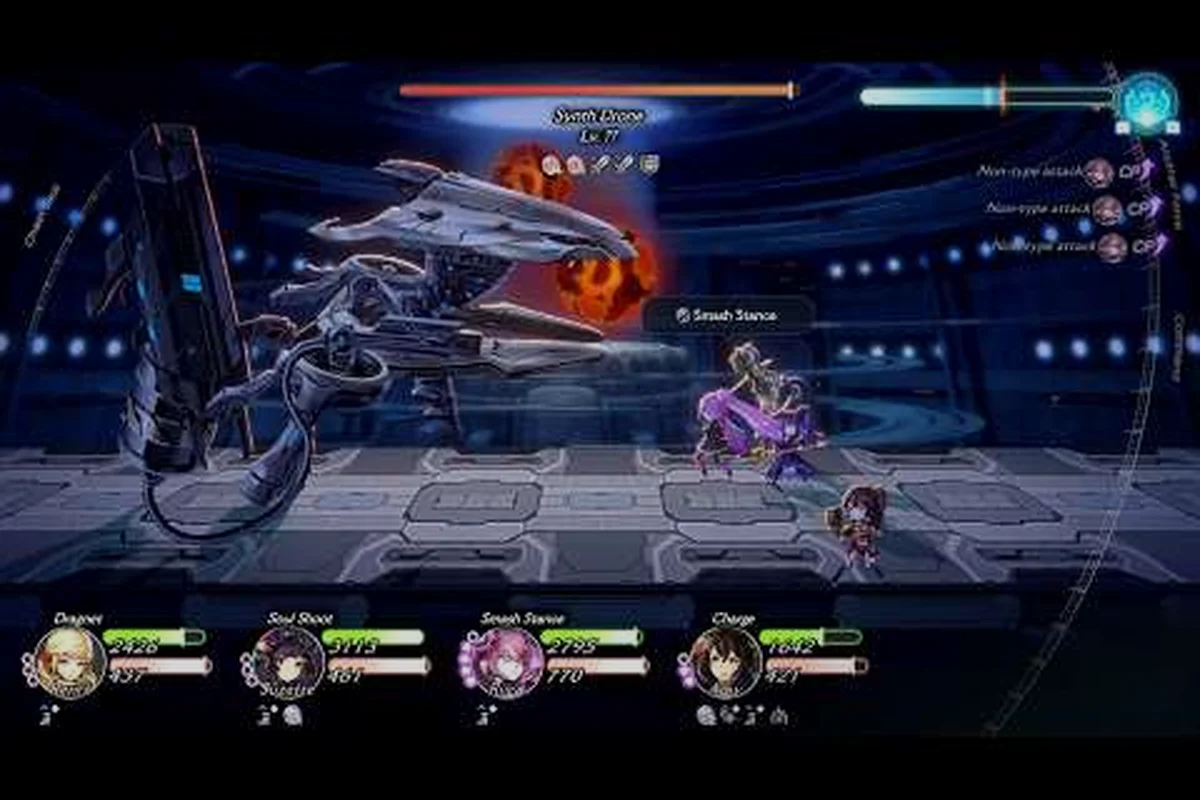
If you typed "Another Eden Begins multiplayer" into a search bar hoping to find a co-op mode, a friend pass, or a shared world, stop right there — the reworked RPG from WRIGHT FLYER STUDIOS, directed by Chrono Trigger writer Masato Kato with music by Yasunori Mitsuda, launched on Steam, Nintendo Switch, and Switch 2 on September 17, 2026 as a strictly single-player experience. This guide explains why there is no Another Eden Begins multiplayer support, what that design decision means for how you build your four-character party across the Antiquity, Present, and Future eras, and where the real online-adjacent features actually live so you don't waste time hunting for a system that does not exist.
Why Another Eden Begins Has No Multiplayer
Another Eden Begins is a single-player, time-travel RPG — that phrasing appears verbatim on the official Steam store page and on the Another Eden Begins Steam listing, and it has been the franchise's defining design pillar since the original mobile release. According to community data on the Another Eden Global subreddit, players who finished the mobile version of Another Eden before the September 2026 PC and console re-release repeatedly asked the same question on Discord: "Is there a co-op patch coming?" The answer from WRIGHT FLYER STUDIOS has stayed consistent — no. The director's stated vision is a solo narrative where the player carries Aldo from 20,000 BC through 300 AD into 1,100 AD without handing the controller to a second person.
The Design Philosophy Behind Solo Play
The single-player commitment is not a missing feature that will be patched in later. It is the structural foundation of the entire game. Masato Kato's writing style, the same style that produced Chrono Trigger and Chrono Cross, relies on a single protagonist whose choices and relationships branch the timeline. Co-op would dilute that intimacy by forcing shared narrative control. According to the official description, the game centers on Aldo, a silent hero who gathers allies across three eras, and his story only works if one player owns every decision point.
| Design Pillar | How It Supports Single-Player Only | What It Would Break in Co-Op |
|---|---|---|
| Branching time-travel narrative | One player owns each era's decisions | Split party could create paradox contradictions |
| Aldo as silent protagonist | Player projects emotion onto a single avatar | A second player needs dialogue, breaking the silence |
| Turn-based combat with Another Force | AI-controlled allies keep the system readable | Real-time human allies would dominate the queue |
| 100+ hour JRPG length | Designed for one continuous save file | Save conflict and progress desync on a shared file |
What the Community Confuses for Multiplayer
Several features look like they might support another player, but they are all single-player systems with online-adjacent components. The most common misconception involves the Another Force gauge, a chain-combat mechanic that triggers spectacular finishers when party members link attacks in sequence. Because the on-screen effect feels "cooperative," players sometimes assume a second human is driving the chain — in reality, all four party slots are controlled by AI scripts you configure in the menu. The same confusion arises around the Demon Lord duels, asynchronous events where you fight the recorded attack patterns of other players' parties. You are not playing with them; you are playing against a ghost of their best run.
Party Building Without a Co-Op Partner
Without another human in the party, every slot in your four-character formation has to earn its place through synergy, role coverage, and element alignment. Party building becomes the single most important Another Eden Begins mechanic, because you are effectively designing a self-sufficient mini-team that has to handle every encounter from random encounters to the Demon Lord gauntlet.
The Four-Slot Foundation
The party is always exactly four characters, no more, no fewer, and the slots are fixed between story chapters. You cannot rotate in a fifth member for a boss, so each pick has to pull weight across exploration, dialogue-locked scenes, and boss arenas. According to community testing on the Another Eden Begins Steam Community hub, the strongest early-game formations follow a healer-DPS-support-flex pattern that mirrors classic JRPG trinity design.
| Slot | Primary Role | Common Early-Game Pick | Why It Matters |
|---|---|---|---|
| Slot 1 | Main DPS / Aldo anchor | Aldo (the canonical protagonist) | Story-locked, carries the narrative |
| Slot 2 | Elemental DPS | Mariel (water) or Toova (earth) | Covers the weakness of slot 1 |
| Slot 3 | Support / healer | Yuna or Krervo | Keeps the party alive through long dungeons |
| Slot 4 | Flex / Another Force battery | Mighty or Suzette | Fills the role your first three cannot cover |
Synergy Rules the AI Follows
Because you are not commanding allies in real time, the AI runs on priority rules you can read in the character's skill description. Each character has an Awakening path that branches at level 60, and the branch determines their AI behavior — one branch typically prioritizes healing when HP drops below 50%, the other prioritizes offensive burst when an enemy is weak to the character's element. According to player reports aggregated on the Another Eden Global subreddit, the most consistent mistake newcomers make is filling all four slots with attackers and expecting the AI to keep anyone alive.
Settings That Matter When You Play Solo
Since no co-op is eating your bandwidth, the real Another Eden Begins settings guide focuses on three areas: input, visuals, and performance. The game runs on Unreal Engine and supports keyboard-and-mouse plus controller on PC, with the Nintendo Switch and Switch 2 versions locked to handheld and docked display modes. The settings menu is organized into tabs labeled Display, Audio, Controls, and Gameplay, and each tab contains toggles that change how the game feels on your specific hardware.
Input and Control Options
On PC, you can swap between keyboard-and-mouse and controller without restarting, because the game hot-swaps the input layer based on the last device that sent a signal. The default keybind for confirming menu choices is Enter, and the default for canceling is Escape, but both can be remapped. Controller players get full button remapping plus the option to invert the camera Y-axis, which matters for the exploration segments where the camera rotates behind Aldo during certain time-travel transitions.
| Control Setting | Default | Recommended For | Notes |
|---|---|---|---|
| Confirm button | Enter / A | All players | Remappable per device |
| Cancel button | Escape / B | All players | Remappable per device |
| Camera Y-axis | Normal | Most players | Invert available |
| Auto-battle toggle | Off | Players learning encounters | Speeds up random fights without skipping bosses |
| Dash toggle | Hold | Experienced players | Tap-to-dash reduces thumb fatigue |
Display and Audio Tabs
The Display tab exposes resolution scale, frame-rate cap, VSync, and three quality presets (Low, Medium, High) plus a Custom option that unlocks individual sliders for textures, shadows, post-processing, and anti-aliasing. Audio has separate volume sliders for master, music, voice, and effects, and a language selector that covers the original Japanese voice track plus the English dub. The voice track is independent of the subtitle language, so you can run Japanese voices with English text if you prefer Kato's intended tone. For more detail on how the controller layer interacts with auto-battle and the co-op-shaped features, see our Another Eden Begins controller guide.
Performance and Graphics Settings Guide
The Another Eden Begins performance guide is short for one reason: the game is well-optimized for its 2.5D presentation, and the September 2026 launch build runs at a stable 60 FPS on mid-range PC hardware at 1080p with the High preset. According to the Steam Community hub, launch-week concurrent players peaked around 945, and the 51 user reviews that posted in the first seven days were Mostly Positive — a notable share of those reviews specifically praised the stability of the port, which is uncommon for JRPG re-releases in the launch window.
What Each Quality Preset Actually Changes
The three presets are not just resolution and texture swaps. Each preset enables a different set of post-processing layers, and the difference is visible in the way elemental burst animations render. The High preset enables bloom on the Another Force finishers, motion blur on time-travel transitions, and dynamic shadows in the Shining City of Elzion. The Low preset strips all three, which is why some launch players reported the game looking "flat" until they manually raised the post-processing slider.
| Preset | Resolution Scale | Shadows | Bloom | Post-Processing | Target Hardware |
|---|---|---|---|---|---|
| Low | 50–75% | Off | Off | Off | Integrated GPU, Switch handheld |
| Medium | 100% | Static | On | Reduced | GTX 1650 / Switch docked |
| High | 100% | Dynamic | On | Full | RTX 3060 / PS5-tier |
| Custom | User-set | User-set | User-set | User-set | Any |
Frame Rate and VSync Behavior
The frame-rate cap is set independently of the quality preset, and the default is 60 FPS with VSync on. If you have a 144 Hz monitor, you can raise the cap to 120 FPS, but the game does not support 144 Hz natively, and community testing shows variable frame times at that setting. The Another Eden Begins graphics settings guide recommendation is to leave VSync on, set the cap to match your monitor's refresh rate, and use the resolution scale slider instead of dropping the preset if you need extra headroom. The reason is that dropping from High to Medium costs you the dynamic shadows in Elzion, while dropping the resolution scale from 100% to 75% keeps the visual layering intact at a lower pixel count.
| Frame-Rate Setting | Recommended For | Trade-Off |
|---|---|---|
| 30 FPS cap + VSync on | Switch handheld, low-end laptop | Longer Another Force animations look choppy |
| 60 FPS cap + VSync on | Default — most players | Smoothest balance of cost and feel |
| 120 FPS cap + VSync off | High-refresh PC monitors | Variable frame times reported by community testers |
| Unlimited FPS | Enthusiast rigs | Heat and power draw, no real visual gain |
Storage and Patch Behavior
The base install is roughly 18 GB on PC, and the Switch and Switch 2 builds are larger because they include both the handheld and docked asset bundles. WRIGHT FLYER STUDIOS has stated that patches will ship through the platform's normal update channel — Steam, Nintendo eShop — and the first post-launch patch, deployed within the first week, addressed the simplified Chinese translation issues that several Steam reviews flagged at launch. Save data is local only, with no cloud sync on PC at launch, which is one more confirmation that the game treats every playthrough as a single-player artifact.
What to Do With the Time Multiplayer Would Have Taken
A 100-hour JRPG is a long commitment even without co-op, and the absence of multiplayer is genuinely a feature for the players who want a focused narrative. The 25 to 30 hours most co-op sessions consume on voice chat, scheduling, and load-in screens is time you can redirect into the New Game+ cycle, the Demon Lord gauntlet, or the bounty-style side quests that are easy to miss on a first run. For a breakdown of which quests carry over and which are permanently missable, our Another Eden Begins bounty quests guide walks through the side content that the main path skips.
Solo Endgame Activities
Once you finish the main story, the endgame opens up into three loops. The first is New Game+, which carries over party levels and key items but resets the story so you can make different era-defining choices. The second is the Demon Lord record attack, where you fight the best runs uploaded by other players' parties — this is the closest thing the game has to a multiplayer system, and it is fully asynchronous. The third is the achievement and trophy hunt, which has roughly 50 unlockables tied to combat feats, story choices, and hidden NPC interactions. For a complete checklist of those unlockables and the fastest route to 100% completion, the Another Eden Begins 100 percent guide maps every trophy to its trigger.
| Endgame Loop | Time Investment | Multiplayer-Like Element | Best For |
|---|---|---|---|
| New Game+ | 25–35 hours | None | Players who want different story outcomes |
| Demon Lord record attack | 10–20 hours | Asynchronous ghost parties | Competitive players |
| Achievement / trophy hunt | 15–25 hours | None | Completionists |
| Bounty side quests | 5–10 hours | None | Players who missed first-run content |
Building a Second Save for Variety
Because there is no shared world and no cross-save cloud sync, you can keep two or three save files on the same machine without any conflict. The most common pattern in the community is one save for the canonical main story and a second save for a "renegade" run where you make the opposite era choices. According to player reports, the two saves together take around 50 hours of content before the story paths start to repeat, which is a comfortable amount of single-player value for a $39.99 RPG.
Frequently Asked Questions
Does Another Eden Begins have co-op or online multiplayer?
No. According to the official Steam store page and the developer's repeated statements, Another Eden Begins is a strictly single-player RPG. The game has no co-op mode, no PvP arena, and no shared world, and the design philosophy around Aldo as a silent protagonist means co-op is unlikely to be added in a post-launch patch. If you want the closest thing to a multiplayer challenge, the asynchronous Demon Lord record attack lets you fight the recorded runs of other players' parties.
Can I play Another Eden Begins multiplayer with a friend on the same PC?
No, the game does not support local split-screen or shared-screen co-op. One save file is tied to one player profile on one device, and the input system only recognizes one controller at a time for the active session. The only way two people can play "together" is by trading the controller between turns, which is impractical given the turn-based combat pacing.
Are there online features in Another Eden Begins?
The only online-adjacent feature is the Demon Lord record attack, where you fight the best uploaded runs from other players' parties. There is no live chat, no friend list, no trading, and no guild system. The game is designed to be playable fully offline once the initial Steam authentication completes, and most players report being able to run the entire main story without an internet connection after the first launch.
What graphics settings should I use for low-end PCs?
The Medium preset at 75% resolution scale is the most common configuration for GTX 1650-class hardware, and it keeps the post-processing layer intact while cutting the GPU load. If you are on integrated graphics or a Switch in handheld mode, the Low preset with VSync on and a 30 FPS cap is the stable option. The custom slider for shadows has the largest single performance impact — disabling it alone recovers roughly 10 to 15 FPS on mid-range hardware.
Where can I find a beginner's guide to Another Eden Begins?
The Another Eden Begins beginner guide covers the early-game combat loop, the Another Force gauge, and the first few era transitions in the Antiquity arc. It is the natural starting point if you have just installed the game and want a non-overwhelming walkthrough of the first ten hours before you start optimizing your party build.